परिचय
यह लेख सीएनसी राउटर और सीएनसी मशीनिंग सेंटर, तथा हाथ से संचालित/एकीकृत-चालित नक्काशी मशीनों का उपयोग करते समय सुरक्षित कार्य पद्धतियों पर व्यावहारिक मार्गदर्शन प्रदान करता है। यह नियोक्ताओं और अन्य लोगों के लिए है, जिनके पास इन मशीनों के उपयोग के तरीके पर नियंत्रण है। मशीन संचालकों को भी यह जानकारी उपयोगी लगेगी।
दुर्घटना इतिहास
लकड़ी उद्योग में चलती मशीनों के संपर्क में आने से होने वाली दुर्घटनाओं की दर सबसे अधिक है। इनमें से अधिकांश दुर्घटनाएँ ऑपरेटर के हाथों या उंगलियों के घूमते हुए कटर के संपर्क में आने के कारण होती हैं। जांच की गई दुर्घटनाओं का विश्लेषण STYLECNC पाया गया कि सबसे आम कारण ये थे:
1. अपर्याप्त या अनुपस्थित गार्ड;
2. ऑपरेटर प्रशिक्षण का अपर्याप्त या अभाव।
प्रशिक्षण एवं सूचना
यह महत्वपूर्ण है कि मशीन में आवश्यक सुरक्षा उपाय किए गए हों और मशीन संचालकों को उनका उपयोग करने और उनसे अपेक्षित कार्य को सुरक्षित तरीके से करने के लिए प्रशिक्षित किया गया हो। रखरखाव, सेटिंग और सफाई में शामिल लोगों के लिए प्रशिक्षण विशेष रूप से महत्वपूर्ण है ताकि यह सुनिश्चित किया जा सके कि ये गतिविधियाँ सुरक्षित तरीके से की जाती हैं। किसी को भी वुडवर्किंग मशीन पर तब तक काम करने की अनुमति नहीं दी जानी चाहिए जब तक कि उन्होंने दक्षता का प्रदर्शन न किया हो। यह सलाह दी जाती है कि सक्षम संचालकों को किसी जिम्मेदार व्यक्ति (निदेशक, वरिष्ठ प्रबंधक आदि) द्वारा लिखित रूप में अधिकृत किया जाए। यह तब प्रशिक्षण रिकॉर्ड का हिस्सा बन जाएगा। जो कोई भी कार्य उपकरण के उपयोग की निगरानी करता है, उसे भी पर्याप्त प्रशिक्षण प्राप्त होना चाहिए और संचालकों और पर्यवेक्षकों दोनों को जानकारी और जहाँ उपयुक्त हो, लिखित निर्देशों तक पहुँच होनी चाहिए।
कानूनी आवश्यकताएं
इन मशीनों के उपयोग को कवर करने वाली कानूनी आवश्यकताएं वुडवर्किंग के सुरक्षित उपयोग में निहित हैं
मशीनरी। कार्य उपकरण विनियमन 1998 (PUWER) का प्रावधान और उपयोग, जैसा कि वुडवर्किंग मशीनरी पर लागू होता है। यह दस्तावेज़ वुडवर्किंग मशीनरी के सुरक्षित उपयोग पर व्यावहारिक सलाह देता है और सूचना और प्रशिक्षण के प्रावधान के साथ-साथ सुरक्षा और रखरखाव के पहलुओं को भी शामिल करता है।
नई मशीन खरीदते समय, उसे अनुरूपता की घोषणा के साथ आपूर्ति की जानी चाहिए और उस पर CE चिह्न होना चाहिए। डिजाइनरों और निर्माताओं को मशीनरी निर्देश और संबंधित यूरोपीय मुक्त व्यापार संघ (EFTA) विनियमों की आवश्यक सुरक्षा आवश्यकताओं का अनुपालन करना चाहिए।
जोखिम मूल्यांकन
मशीन के कई अलग-अलग डिज़ाइन होते हैं, जिनकी जटिलता का स्तर भिन्न-भिन्न होता है। सभी मशीनों को निर्माता के निर्देशों के अनुसार सही सेवाओं के साथ स्थापित किया जाना चाहिए। इसमें चिप्स और धूल को हटाने के लिए पर्याप्त निकासी व्यवस्था शामिल होनी चाहिए। मशीन में किसी भी प्रकार का बदलाव तब तक न करें जब तक आपने निर्माता/आपूर्तिकर्ता से परामर्श न कर लिया हो और यह पुष्टि न मिल गई हो कि बदलाव मशीन की सुरक्षा/कार्यक्षमता के लिए हानिकारक नहीं होगा। प्रत्येक मशीन की अपनी विशेषताएं और संरचना होती है, जिन्हें आपको खतरों की पहचान और जोखिमों के आकलन करते समय ध्यान में रखना चाहिए। आपको निम्नलिखित खतरों पर विचार करना होगा:
1. वर्कपीस या कटर का निष्कासन - शुरू करने से पहले सुनिश्चित करें कि वे सुरक्षित हैं;
2. घूर्णन कटर और स्वचालित उपकरण परिवर्तक (जहां फिट किया गया हो) के साथ संपर्क;
3. चलती हुई मेजों या मशीनिंग हेडों के कारण फंसना और कुचलना;
4. नियंत्रण प्रणाली में खराबी के कारण अप्रत्याशित गति या स्टार्ट-अप;
5. अत्यधिक शोर उत्सर्जन;
6. धूल और चिप्स का उत्पादन;
7. स्वचालित हैंडलिंग और लोडिंग उपकरण (जहां फिट किए गए हों);
8. वायवीय और वैक्यूम क्लैम्पिंग उपकरण (जहां फिट किए गए हों);
9. काटने के उपकरण के घूर्णन और पहुंच गति की सुरक्षित प्रोग्रामिंग, जो संसाधित की जा रही सामग्री के अनुकूल हो;
10. किसी भी नए प्रोग्राम का धीमी गति से 'ड्राई रन' अवश्य किया जाना चाहिए ताकि किसी भी प्रकार की त्रुटि होने पर टकराव आदि से बचा जा सके।
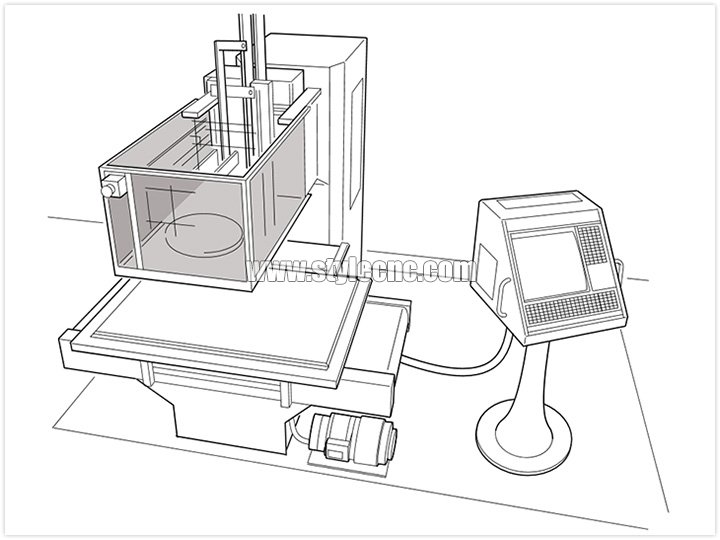
चित्रा 1a
फिक्स्ड डिस्टेंस गार्ड के साथ छोटा ओवरहेड/सी-फ्रेम सीएनसी राउटर। स्थिर और गतिशील मशीन भागों के बीच किसी भी कुचलने या फंसने के जोखिम को भी नियंत्रित किया जाना चाहिए।
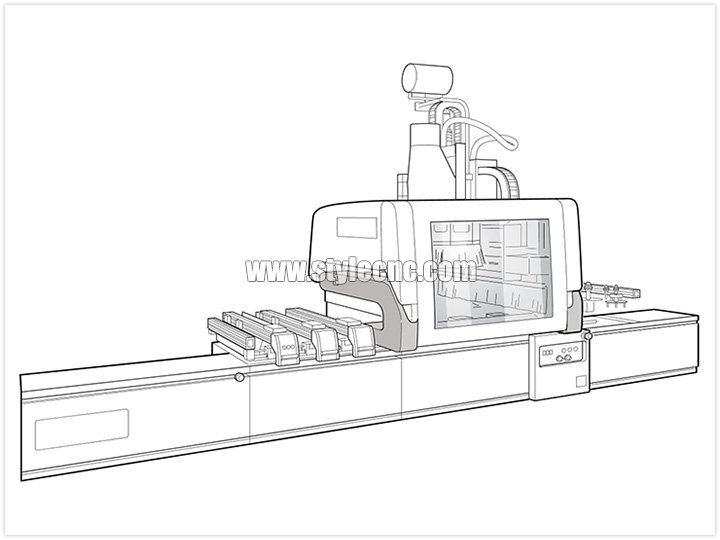
चित्रा 1b
दबाव संवेदनशील बम्परों के साथ सी-फ्रेम/कैंटिलीवर आर्म मशीन।
सीएनसी रूटर्स और सीएनसी मशीनिंग केंद्र
सीएनसी रूटर्स और सीएनसी मशीनिंग सेंटर की 2 मुख्य श्रेणियां हैं:
1. सी-फ्रेम/कैंटिलीवर आर्म/ओवरहेड;
2. पोर्टल फ्रेम (गैन्ट्री/गोलपोस्ट).
सी-फ्रेम/कैंटिलीवर आर्म/ओवरहेड
इन मशीनों को कभी-कभी ओवरहेड राउटर के रूप में संदर्भित किया जाता है, इनमें एक एकल या बहुक्रियाशील हेड यूनिट होती है जो सी-फ्रेम/कैंटिलीवर आर्म पर लगी होती है जो या तो टेबल के पार चलती है या स्थिर रहती है, जबकि कार्य टेबल इसके नीचे चलती है, चित्र 1a, b और c देखें।
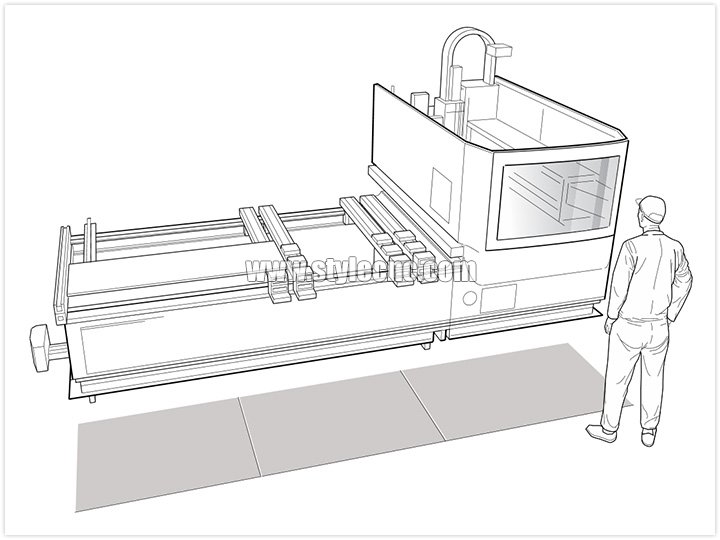
चित्रा 1c
सुरक्षा मैट के साथ सी-फ्रेम/कैंटिलीवर आर्म मशीन।
पोर्टल फ्रेम (गैन्ट्री/गोलपोस्ट)
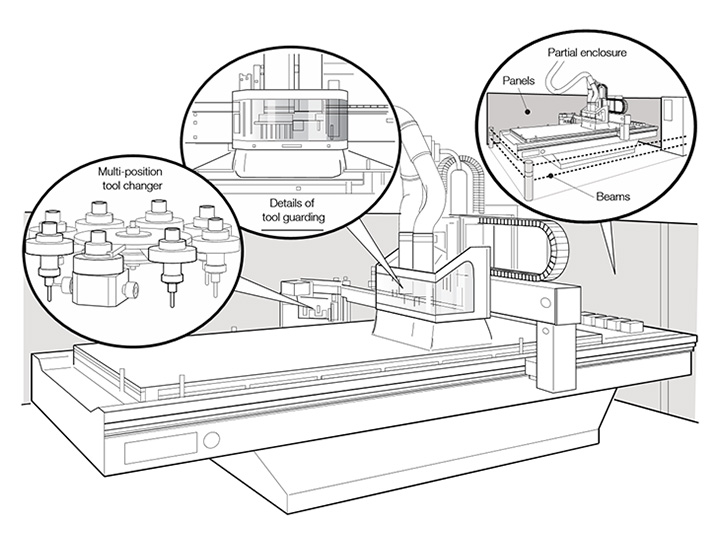
इन मशीनों में एक एकल या बहुक्रियाशील हेड यूनिट होती है, जो पोर्टल फ्रेम (गैन्ट्री/गोल पोस्ट) पर लगी होती है, जो कार्य टेबल के ऊपर चल सकती है या कार्य टेबल के उसके नीचे चलने पर भी स्थिर रह सकती है, चित्र 2 देखें।
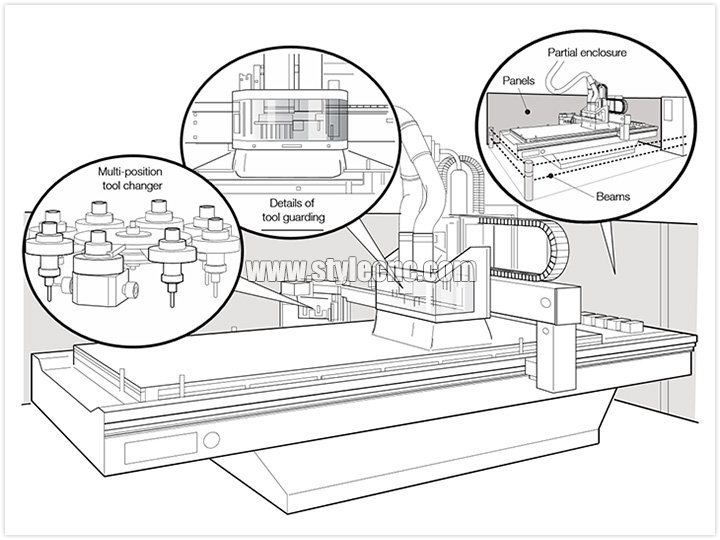
चित्रा 2
आंशिक बाड़े और प्रकाश अवरोध के साथ पोर्टल (गैन्ट्री/गोलपोस्ट फ्रेम) मशीन।
सीएनसी मशीनिंग सेंटर अनुप्रयोगों में रूटिंग, वर्टिकल और हॉरिजॉन्टल बोरिंग, ग्रूविंग और शेपिंग अनुप्रयोग शामिल हो सकते हैं। ये सभी कार्य एक मल्टी-पोजिशन टूल चेंजर द्वारा किए जाते हैं जो हेड यूनिट के बगल में या मशीन के फ्रेम पर रखा जाता है, चित्र 2 देखें। यह महत्वपूर्ण है कि सही उपकरण का उपयोग किया जाए, जो मशीन और अनुप्रयोग के लिए उपयुक्त हो। उपकरणों को भी अच्छी स्थिति में बनाए रखा जाना चाहिए।
अधिकांश मशीनें 3 अक्षों, X और Y (क्षैतिज गति) और Z (ऊर्ध्वाधर गति) में काम करती हैं। कुछ मशीनों में ऊर्ध्वाधर और क्षैतिज घूर्णन अक्ष (5 अक्ष मशीनें) के साथ काम करने की सुविधा होती है और जोखिम मूल्यांकन में इन सभी अक्षों को ध्यान में रखना होगा। यह विशेष रूप से धूल और चिप संग्रह और वर्कपीस से निकाले गए अपशिष्ट टुकड़ों के प्रक्षेपवक्र के लिए महत्वपूर्ण है।
रक्षा करना
सीएनसी राउटर को कई तरह के फिक्स्ड गार्ड द्वारा सुरक्षित किया जा सकता है, लेकिन किसी भी सुरक्षा दूरी को मानकों के अनुरूप होना चाहिए। यदि रखरखाव या सफाई के उद्देश्य आदि के लिए उपयोगकर्ता द्वारा फिक्स्ड गार्ड को हटाया जाना है, तो उनके फिक्सिंग सिस्टम को गार्ड से या गार्ड को हटाने पर मशीन से जुड़ा रहना चाहिए, उदाहरण के लिए ऐसे स्क्रू लगाए जाने चाहिए जो गार्ड से जुड़े रहें।
हालाँकि, जैसे-जैसे राउटर पर नियंत्रण प्रणाली मैन्युअल नियंत्रण से सीएनसी तक विकसित हुई है, मशीनिंग प्रक्रिया के दौरान ऑपरेटर के हस्तक्षेप की डिग्री कम हो गई है। स्वचालित लोडिंग और अनलोडिंग सुविधाओं और स्वचालित उपकरण बदलने के जुड़ने से कटिंग क्षेत्र के करीब पहुँचने की आवश्यकता और कम हो गई है। इसने निर्माताओं को सुरक्षा के ऐसे तरीके अपनाने की अनुमति दी है जो पारंपरिक रूप से पुरानी, मैन्युअल रूप से संचालित मशीनों पर इस्तेमाल की जाने वाली नज़दीकी सुरक्षा से अलग हैं।
बड़ी मशीनों पर मशीनिंग प्रक्रिया के दौरान एक आवरण द्वारा काटने वाले क्षेत्र तक पहुंच को रोकना सामान्य प्रथा है, चित्र 3 देखें। आवरण का उद्देश्य रोकना है:
1. खतरे वाले क्षेत्र तक पहुंच;
2. उपकरण के भाग का बाहर निकलना;
3. स्थिर और गतिशील मशीन भागों के बीच किसी भी प्रकार का कुचलन या फँसने का खतरा।
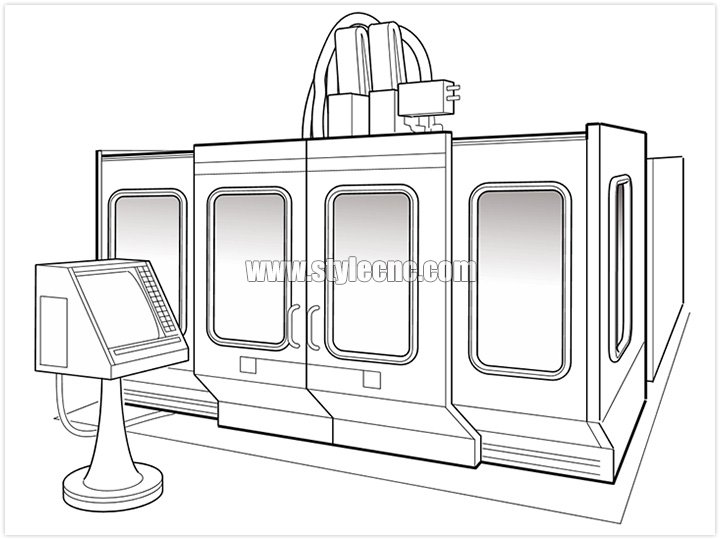
चित्रा 3
पूर्ण संलग्नक के अंदर सीएनसी मशीनिंग केंद्र।
बाड़े में प्रवेश सामान्यतः निम्नलिखित के लिए आवश्यक है:
1. वर्कपीस को लोड करना या उतारना;
2. सफाई, सेटिंग या समायोजन;
3. उपकरण बदलना.
जहां बाड़े में प्रवेश आवश्यक है, वहां एक इंटरलॉक्ड दरवाजे के माध्यम से प्रवेश किया जाना चाहिए जो कटर और अन्य खतरनाक भागों के चलते समय प्रवेश को रोक देगा। उपयोग किए जाने वाले किसी भी इंटरलॉक को मानकों का पालन करना चाहिए। बाड़े की आवश्यकताओं में शामिल हैं:
1. फर्श स्तर से कम से कम 1.8 मीटर तक सुरक्षा प्रदान करना;
2. प्रभाव-प्रतिरोधी सामग्रियों से बना होना जो बाहर निकले हुए कार्य-वस्तुओं या मशीन घटकों को धारण करने में सक्षम हो;
3. आसन्न स्टार्ट अप की श्रव्य या दृश्य चेतावनी (जैसे पीली रोशनी) होना;
4. एक आपातकालीन स्टॉप डिवाइस (बाड़े के अंदर) होना जो आवश्यक होने पर स्टार्ट-अप को रोक देगा; ■ मानकों का अनुपालन करने वाले दरवाजे के इंटरलॉकिंग को रीसेट करने के लिए एक नियंत्रण उपकरण होना चाहिए। इसे बाड़े के बाहर स्थित होना चाहिए लेकिन ऐसी स्थिति में होना चाहिए जिससे अंदर का स्पष्ट दृश्य दिखाई दे। इसे बाड़े के अंदर से पहुँचा नहीं जा सकता;
5. शोर कम करने वाली विशेषताएं होना, जहां मशीनें 85 डीबी(ए) से अधिक शोर स्तर उत्पन्न करती हैं।
पूर्ण घेरे के स्थान पर अन्य सुरक्षा उपायों का उपयोग किया जा सकता है, जैसे:
1. आंशिक बाड़े, प्रकाश अवरोधों/किरणों के साथ या बिना (चित्र 2);
2. दबाव संवेदनशील बम्पर (चित्र 1बी);
3. दबाव संवेदनशील मैट (चित्र 1सी)।
चुने गए सुरक्षा उपायों का चुनाव निर्माता/डिजाइनर के इस आकलन पर निर्भर करेगा कि मशीनरी निर्देश और संबंधित यूरोपीय मुक्त व्यापार संघ (ईएफटीए) विनियमों की आवश्यक सुरक्षा आवश्यकताओं को पूरा किया गया है या नहीं।
यदि कोई खुला स्थान है तो उपकरण के भागों या वर्कपीस के भागों के बाहर निकलने के जोखिम से बचाने के लिए पर्दे का उपयोग किया जाना चाहिए। इसलिए उन्हें 100 मीटर/सेकंड की गति से हिट होने पर 70 ग्राम प्रक्षेप्य को रोकने वाले प्रभाव परीक्षण को पास करने में सक्षम होना चाहिए।
जहां कभी-कभार ही पहुंच की आवश्यकता होती है, उदाहरण के लिए, केवल रखरखाव कार्यों के लिए, वहां एक स्थायी गार्ड का उपयोग किया जा सकता है (चित्र 1a)। बशर्ते मशीन पर काम करते समय आकस्मिक रूप से चालू होने से रोकने के लिए आवश्यक कदम उठाए गए हों (देखें 'रखरखाव')।
धूल और चिप्स को हटाने के लिए मशीन में प्रभावी स्थानीय निकास वेंटिलेशन (एलईवी) भी होना चाहिए।
ब्रेकिंग
उपकरण स्पिंडल के लिए एक स्वचालित विद्युत ब्रेक उपलब्ध कराया जाना चाहिए ताकि वे दस सेकंड के भीतर बंद हो जाएं।
उपकरण बदलने की प्रणाली
कुछ मामलों में, कटिंग एरिया का आवरण टूल चेंजर से संपर्क को रोकता है। अन्य मामलों में, मशीनिंग एरिया से अलग एक टूल मैगज़ीन हो सकती है जिसका अपना एक्सेस डोर होता है। ऐसे एक्सेस डोर को टूल चेंजर के साथ इंटरलॉक किया जाना चाहिए और यदि कटर तक पहुंच है, तो उन्हें भी कटर के साथ इंटरलॉक किया जाना चाहिए। मैन्युअल टूल बदलते समय, टूल डालते या निकालते समय टूल होल्डर के घूमने का कोई जोखिम नहीं होना चाहिए। टूल होल्डर को इंडेक्स करने के लिए 'होल्ड-टू-रन' या सिंगल-स्टेप पेंडेंट कंट्रोल का उपयोग करें (मोड सिलेक्शन स्विच भी देखें)।
रखरखाव
सभी सुरक्षा उपकरणों की नियमित अंतराल पर उचित रूप से प्रशिक्षित और सक्षम व्यक्ति (आवश्यक कौशल, ज्ञान और अनुभव रखने वाले व्यक्ति) द्वारा जांच की जानी चाहिए। इसमें मशीन के उपयोग की मात्रा और आपूर्तिकर्ता या निर्माता की सिफारिशों को ध्यान में रखा जाना चाहिए। रखरखाव और निरीक्षण जांचों का विवरण, विशेष रूप से पहचानी गई कार्रवाइयों और उनके पूर्ण होने की पुष्टि को रिकॉर्ड करें।
कुछ रखरखाव के लिए मशीन को सुरक्षित रूप से अलग रखना आवश्यक हो सकता है ताकि आकस्मिक स्टार्ट-अप से बचा जा सके। सुरक्षित विद्युत अलगाव का मतलब है कि विद्युत ऊर्जा बंद कर दी जाती है, और यह सुनिश्चित करने के लिए उपयुक्त सावधानियां भी हैं कि यह बंद रहे। अनजाने में फिर से जुड़ने से रोका जाना चाहिए - उदाहरण के लिए यांत्रिक तरीकों से 3-चरण को तोड़कर और लॉकिंग-ऑफ सुविधा रखकर।
मोड चयन स्विच
जहाँ मशीनों को सेटिंग के दौरान मूवेबल इंटरलॉक्ड गार्ड और/या सुरक्षात्मक उपकरणों को निष्क्रिय करके संचालित करने के लिए डिज़ाइन किया गया है, वहाँ मशीनिंग और संचालन के सेटिंग मोड के बीच चयन करने के लिए एक मोड चयन स्विच प्रदान किया जाना चाहिए। मशीन सेटिंग मोड के संचालन में, यदि मूवेबल गार्ड खुले हैं और/या सुरक्षात्मक उपकरण अक्षम हैं, तो कोई भी खतरनाक गतिविधि केवल तभी संभव होनी चाहिए जब कई आवश्यकताएँ पूरी हो गई हों, जिनमें शामिल हैं:
1. स्पिंडल रोटेशन और एकल अक्ष आंदोलन को होल्ड-टू-रन नियंत्रण/सक्षम करने वाले डिवाइस द्वारा नियंत्रित किया जाता है;
2. एकल अक्ष गति 2 मीटर/मिनट गति या 10 मिमी वृद्धि तक सीमित होनी चाहिए;
3. यदि उपकरण रोटेशन प्रदान किया गया है तो इसे अधिकतम 300 चक्कर/मिनट तक सीमित किया जाना चाहिए और होल्ड-टू-रन नियंत्रण जारी होने के बाद उपकरण रोटेशन 2 चक्कर से कम में बंद हो जाना चाहिए।
उपकरण या कुल्हाड़ियों की गतिविधियों के लिए होल्ड-टू-रन नियंत्रण उपकरण और सक्षम उपकरण मुख्य नियंत्रण पैनल पर और/या मशीन से जुड़े एक मोबाइल नियंत्रण सेट पर स्थित होने चाहिए, जो एक निश्चित केबल या वायरलेस (यदि उपलब्ध हो) द्वारा मशीन से जुड़े होने चाहिए।
हाथ से संचालित/एकीकृत-संचालित नक्काशी मशीनें
ये ओवरहेड/सी-फ्रेम प्रकार की मशीनें हैं जिनमें टेबल के ऊपर स्थित एक ही टूल स्पिंडल/वर्क हेड होता है। टेबल 3 दिशाओं (X, Y और Z) में घूमने में सक्षम हो सकती है। चलने की गति 6000 आरपीएम से लेकर 24 000 आरपीएम तक भिन्न हो सकती है। वर्कपीस को आमतौर पर टूल स्पिंडल की दिशा के विपरीत दिशा में मशीन में फीड किया जाता है। यह या तो मैन्युअल रूप से किया जा सकता है जैसे कि कुछ पुरानी मशीनों पर, चित्र 4 देखें, या एक एकीकृत वर्कपीस फीड सिस्टम के साथ जहां मशीनिंग ऑपरेशन के दौरान वर्कपीस को यांत्रिक रूप से पकड़कर नियंत्रित किया जाता है।
औजारों की सुरक्षा
रिंग गार्ड
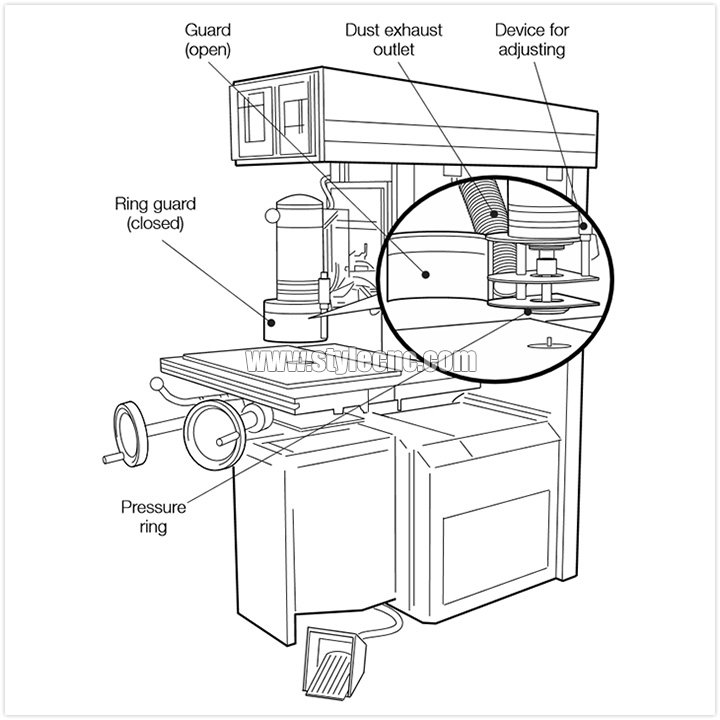
चित्रा 4
रिंग गार्ड के साथ मैन्युअल रूप से संचालित ओवरहेड/सी-फ्रेम रूटर जिसमें उपकरण बदलने का विकल्प होता है।
इसमें एक समायोज्य और स्व-बंद होने वाला रिंग गार्ड लगा होना चाहिए जो उपकरण को ऊपर से और किनारों से प्रवेश करने से रोकेगा। रिंग गार्ड को मशीनिंग के दौरान वर्कपीस पर टिका रहना चाहिए और इसकी निचली सतह टेबल के समानांतर रहनी चाहिए। इसे या तो एक टुकड़े से बनाया जा सकता है या एक दबाव रिंग के साथ एक आवरण गार्ड के संयोजन से बनाया जा सकता है जो उपकरण बदलने की अनुमति देता है, उदाहरण के लिए एक गैर-अंतर्ग्रहीत टिका हुआ कवर के माध्यम से जिसे बंद स्थिति में मैन्युअल रूप से लॉक किया जा सकता है, चित्र 4 देखें। निष्कासन के जोखिम को कम करने के लिए, रिंग गार्ड को वर्कपीस पर 50N और 150N के बीच का बल लगाना चाहिए।
रिंग गार्ड का आंतरिक व्यास उस उपकरण को सबसे बड़े व्यास के साथ माउंट करने की अनुमति देना चाहिए जिसके लिए मशीन को डिज़ाइन किया गया है। हालाँकि, यदि उपकरण का अधिकतम व्यास 80 मिमी से अधिक है, तो अलग-अलग आंतरिक व्यास वाले कम से कम 2 रिंग गार्ड होने चाहिए। रिंग गार्ड का स्थानीय निकास वेंटिलेशन से कनेक्शन होना चाहिए और इसे निम्न में से किसी एक से निर्मित किया जाना चाहिए:
■ कम से कम 1.5 मिमी की दीवार मोटाई वाला स्टील;
■ कम से कम 3 मिमी की दीवार मोटाई के साथ हल्का मिश्र धातु;
■ कम से कम 3 मिमी की दीवार मोटाई के साथ पॉली कार्बोनेट;
■ अन्य प्लास्टिक सामग्री जिसकी प्रभाव शक्ति कम से कम 3 मिमी पॉलीकार्बोनेट के बराबर या उससे बेहतर हो;
■ कम से कम 5 मिमी की दीवार मोटाई वाला कच्चा लोहा।
रिंग गार्ड सपोर्ट रिंग गार्ड सपोर्ट को इसे स्पिंडल हेड के साथ स्वचालित रूप से घूमने की अनुमति देनी चाहिए और इसकी निचली सतह को टेबल के समानांतर सेट करने की अनुमति देनी चाहिए, चाहे टेबल की स्थिति कुछ भी हो। इसे रिंग गार्ड को समायोजित करने की भी अनुमति देनी चाहिए ताकि यह उस उपकरण की अधिकतम लंबाई को ध्यान में रख सके जिसके लिए मशीन डिज़ाइन की गई है। समायोजन किसी उपकरण की सहायता के बिना संभव होना चाहिए।
ब्रेकिंग
उपकरण स्पिंडल के लिए एक स्वचालित विद्युत या यांत्रिक ब्रेक उपलब्ध होना चाहिए ताकि यह दस सेकंड के भीतर बंद हो जाए।
टूलींग
एकल-स्पिंडल हस्त-प्रदत्त/एकीकृत-प्रदत्त नक्काशी मशीनों पर प्रयुक्त कोई भी राउटर कटर, जिसका व्यास 16 मिमी से अधिक हो, चिप सीमा प्रकार का होना चाहिए।